Home/Protective coatings
Service 02

Protective coatings & finishes

Right primer, right topcoat, applied inside the recoat window and in the right conditions. Any coating looks right on the day it is sprayed. The question is whether it is still holding twelve months into service.
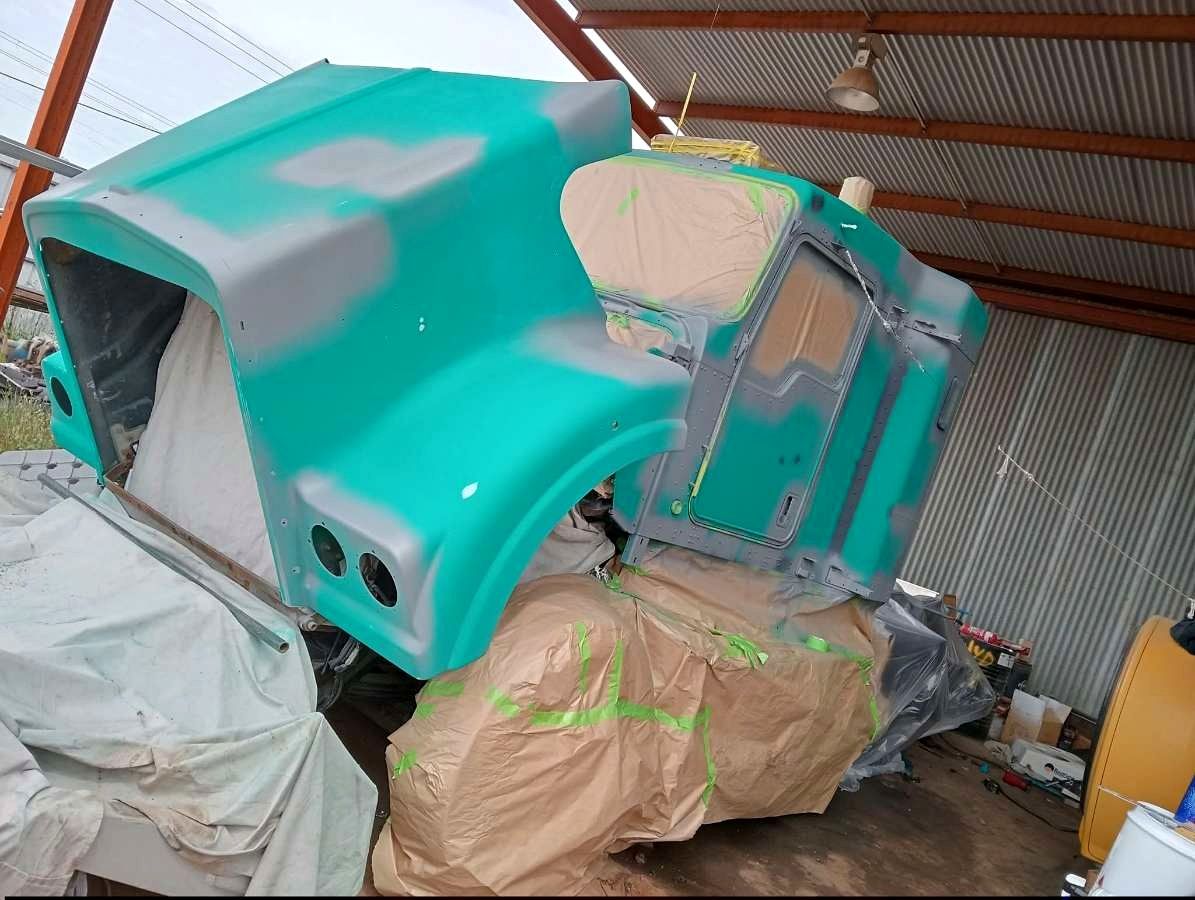
Prime mover cab in custom colour during two pack application
Prime mover cab · custom colour, in the booth
01 — The approach

Coatings that
hold in the field.

A coating system is chosen against two things: the environment the plant actually works in, and how long you need it to last. Not what is on the shelf, and not what was used last time.

That means a machine going to a coastal site gets a different system to one working in a sheltered inland yard, even if the client wants the same colour. We will explain the difference and let you decide.

“Even colour, sharp lines, and components finished down to the wheels and steps.”

What finished actually means
02 — Interactive

Coating system
selector.

Tell it where the plant works and how long you need the finish to last. It will give you the corrosivity category, an indicative preparation grade and a starting point for the system. Useful for scoping a job or sanity checking a quote you have been given.

03 — Specification

Systems and
standards.

Reference standardAS/NZS 2312.1 — protection of structural steel against atmospheric corrosion by protective coatings (paint).
CorrosivitySystem matched to the corrosivity category and the design life specified, per ISO 9223 categories C2 to C5 and immersion classes.
Film thicknessDry film thickness checked against the specification and recorded.
Recoat windowEach coat applied inside the manufacturer's stated window. Outside it, adhesion is a gamble.
ConditionsSubstrate temperature, dew point and humidity considered before application, not after.
Systems applied
  • Two pack epoxy systems
  • Polyurethane topcoats
  • Zinc rich primers
  • Rust inhibitive primers
  • High build epoxy intermediates
  • Heavy duty industrial topcoats
  • Custom brand colour matching
  • Multi colour fleet finishes
  • Hi-vis and safety markings
  • Anti-slip step and walkway treatments
  • Component and wheel detailing
  • Decals and plate reinstatement
04 — Detail

The parts most
contractors skip.

Anyone can spray a flat panel. The difference shows up on the steps, the wheels, the handrails and the bits an inspector actually puts their hands on.

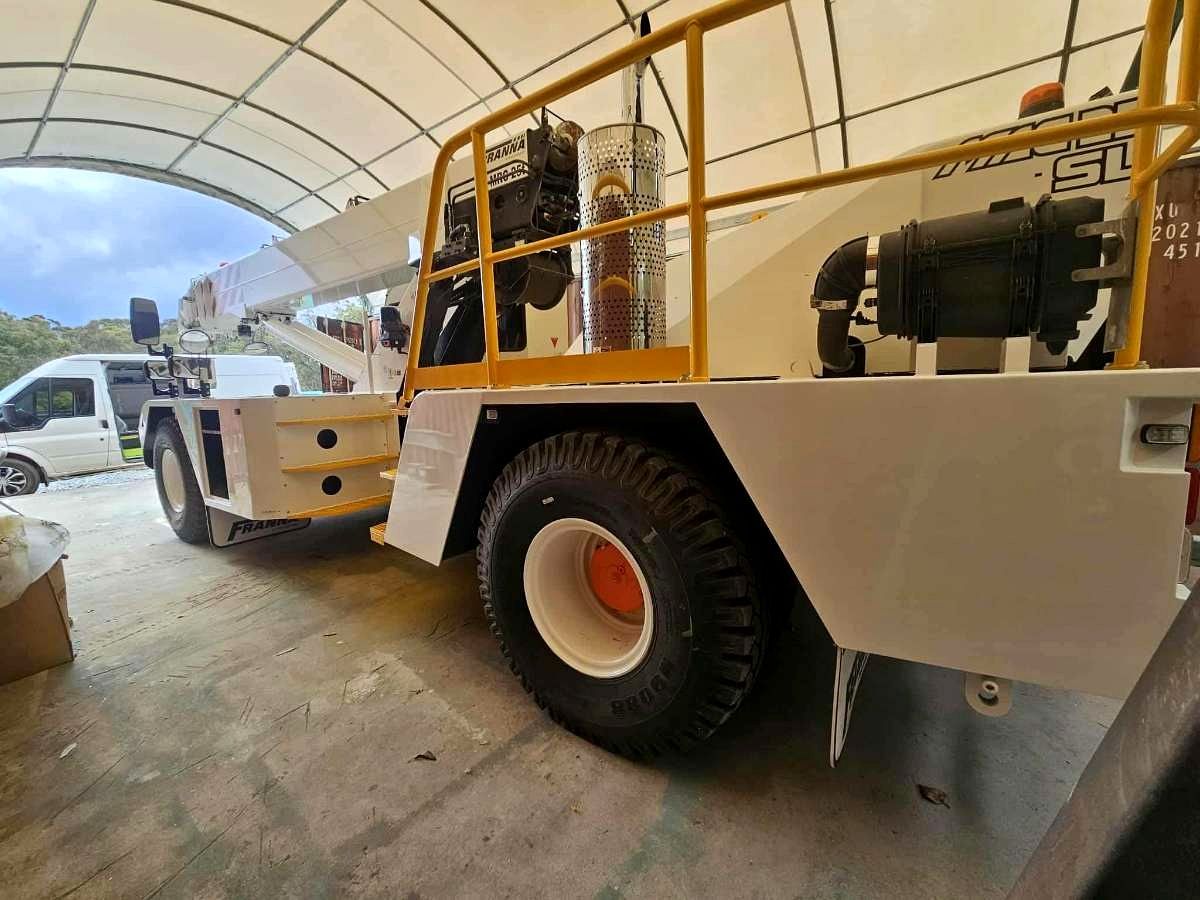
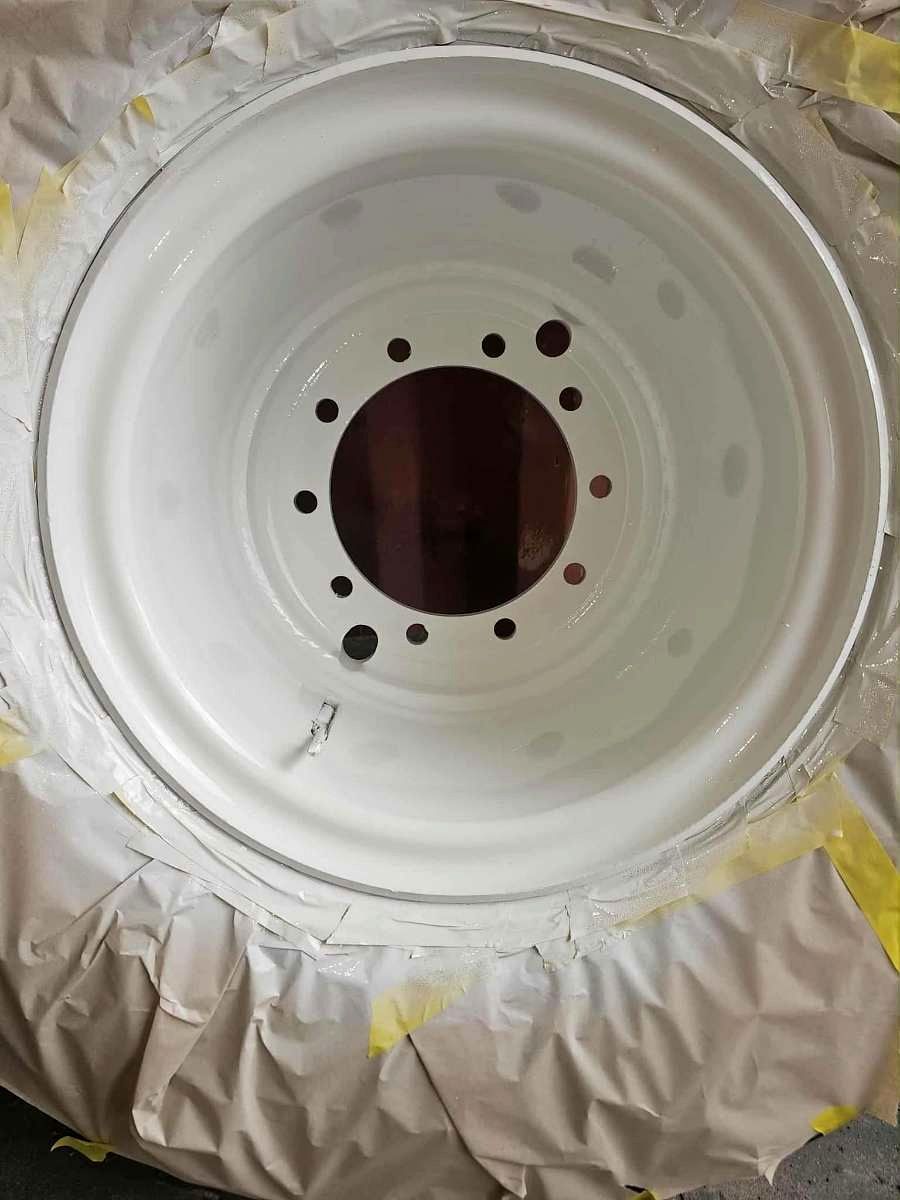
Wheel finished to match the machine
Wheels · finished to match
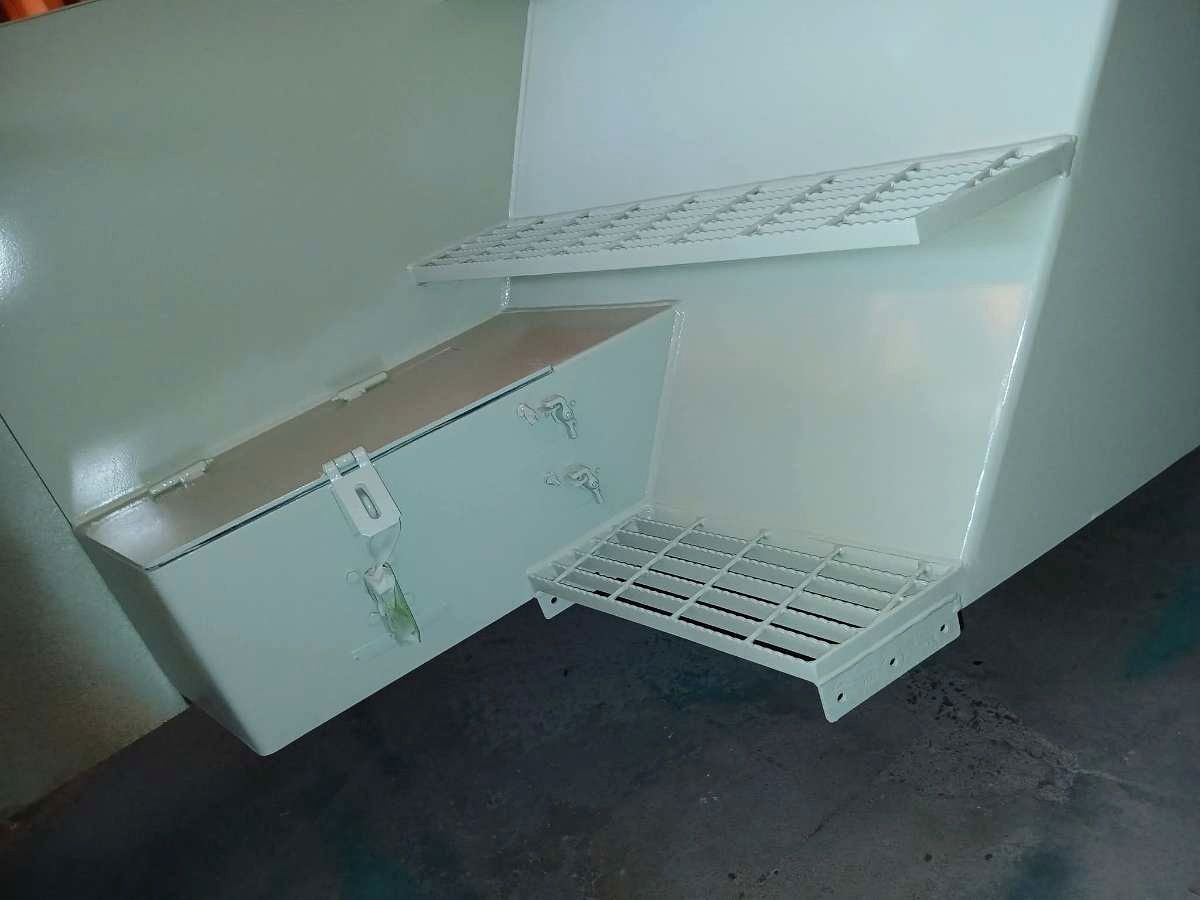
Steps with anti-slip treads
Steps · anti-slip treads
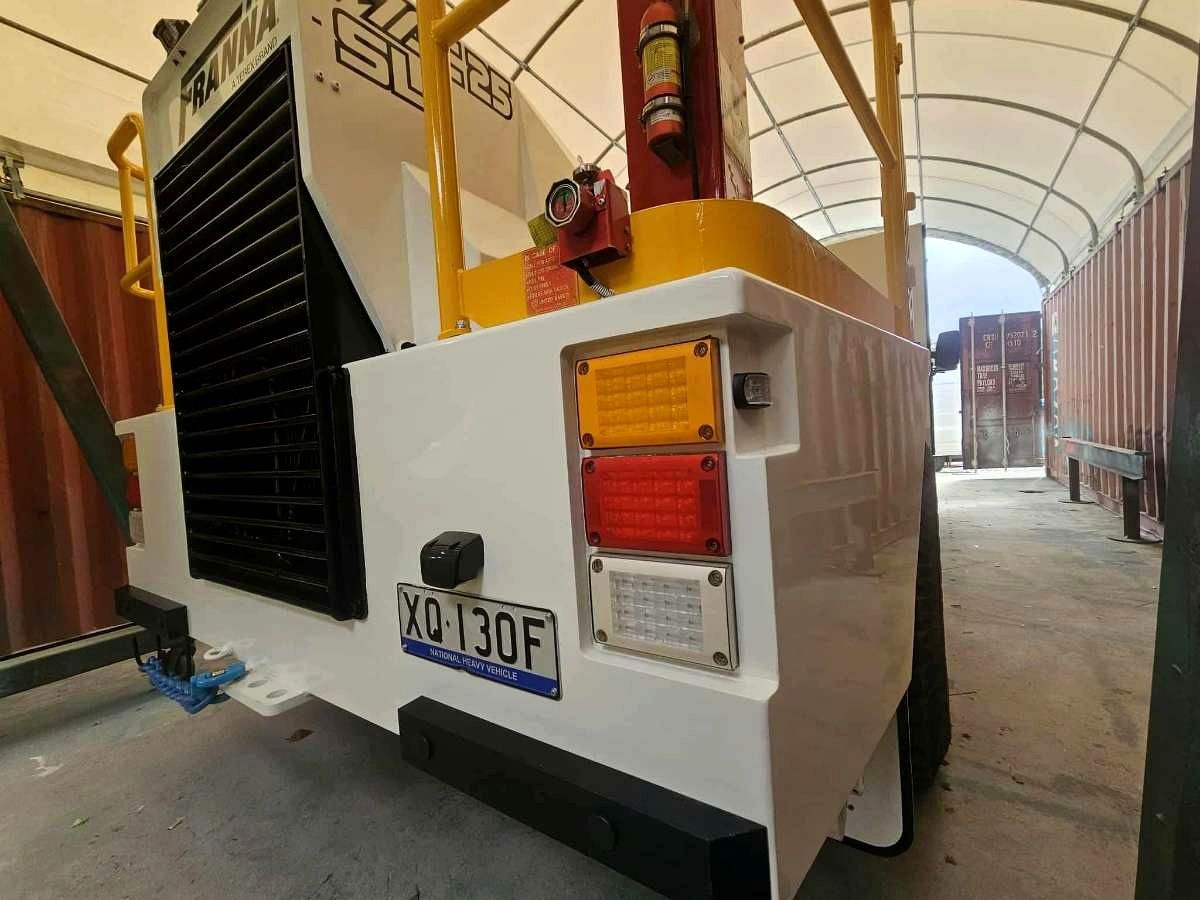
Crane tail lights and plate
Tail · lights and plate
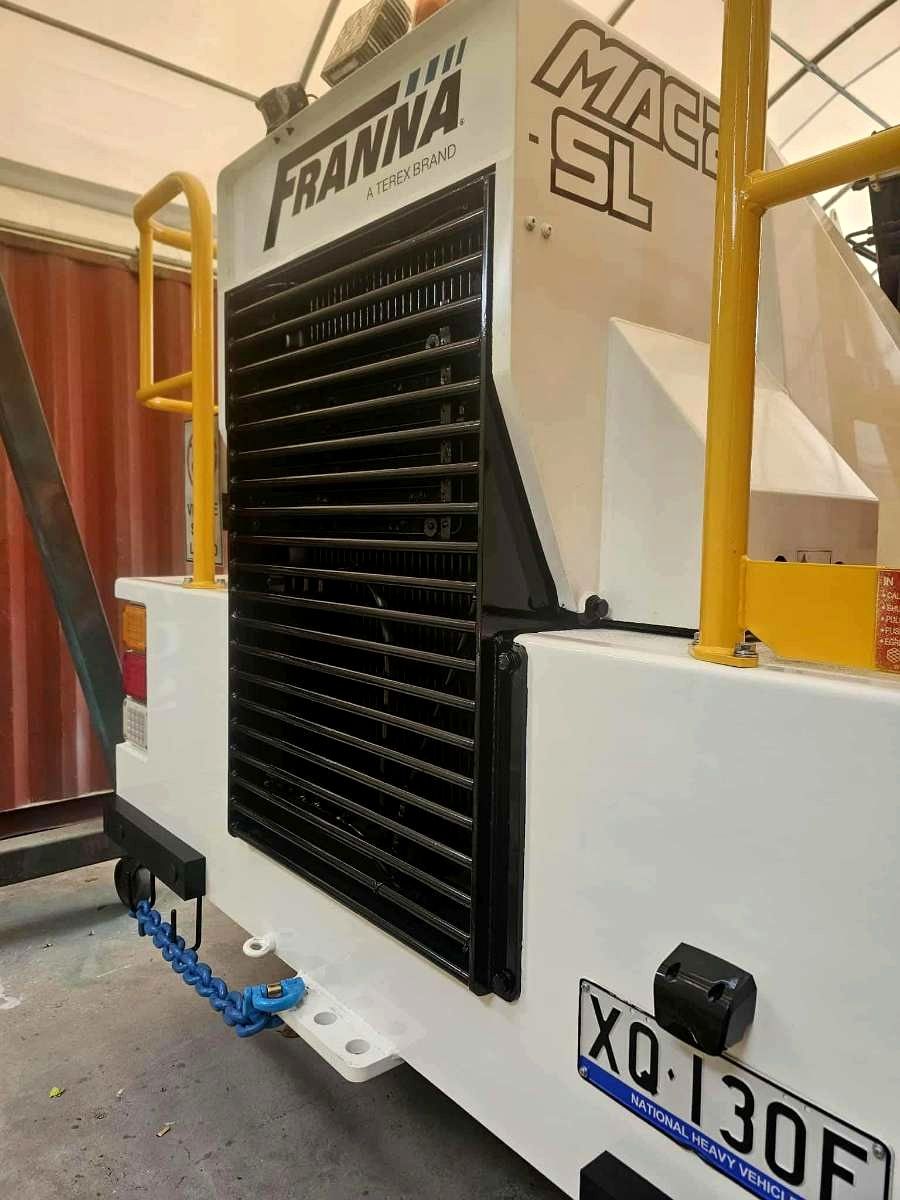
Radiator housing finished
Housings · sharp lines
05 — Honest limits

What we will
raise early.

Spray application has real constraints. Better you hear them now than after a start date is locked in.

Mobile applicationWe work at your site or yard. Without a fixed booth, ambient conditions matter and weather affects scheduling. A workshop is planned.
IsocyanatesTwo pack polyurethane contains isocyanates. Application requires exclusion zones, respiratory protection and controlled access. It affects who else can be on site.
OversprayAdjacent plant, vehicles and structures need masking or separation. Site layout drives the method.
Colour matchingWe match to brand and fleet colours. Exact matches to a weathered existing finish are not always achievable, and we will say so.
CertificationWe are not a certified coatings inspector. Where a project requires third party inspection or NACE/ACA certified sign-off, that is engaged separately.

Have a specification already?

Send it through. If we cannot achieve it we will tell you before you commit, not after.